
Choosing Linear Lights for Narrow Warehouse Aisles
A narrow warehouse aisle needs light that follows its length and reaches the surfaces used for picking. A circular pool from an overhead fitting can send useful output onto rack tops or outside the aisle. Begin with aisle dimensions, mounting positions and the direction of the required distribution before comparing linear lights.
In this guide
Draw the aisle as a working space
An aisle is more than the clear strip between two racks. Staff may read labels on either side, inspect stock at different levels and watch forklift movements along the route. Record clear width, rack height, travel direction and the position of picking faces. Include the space at aisle ends, where people turn or transfer goods. These details explain where light is useful and where it would simply land on shelving or structure. A simple dimensioned plan is a stronger starting point than a photograph of an existing fitting.
Read the shape of the distribution
The physical shape of a luminaire and the shape of its beam are separate characteristics. A long housing can still have a broad distribution. Conversely, an optical arrangement can direct output along a narrow route or towards particular surfaces. Request the photometric information for the exact lens being proposed and orient it correctly in the layout. The same asymmetric fitting can produce a different result if its optical direction is reversed. Product length alone does not establish whether a linear light suits an aisle.
Keep light out of the rack structure
Light intercepted by the top of a tall rack does little for a label several shelves below. Examine the fitting position in relation to the aisle centreline and the two rack faces. Roof members, sprinkler pipework and stored goods can interrupt the path even when the ceiling plan appears clear. A proposed calculation should include realistic rack geometry and relevant vertical surfaces. This helps identify whether a concentrated aisle optic or a different position deserves investigation before more electrical power is added.
Check continuity along the route
A narrow beam can reach a useful surface yet leave poorly lit sections between fittings. Review the complete run, including its first and last positions, rather than judging a single illuminated patch. Ask how minimum illumination and uniformity compare with the project criteria. Consider normal viewing directions as well: operators should not have to face an uncomfortable source while reading a shelf. A representative aisle trial can be useful when it uses the intended mounting height, selected optic and realistic goods arrangement.
Prepare for the next rack change
Warehouse layouts rarely remain fixed indefinitely. Record the chosen lens, mounting arrangement and control configuration so a future rack alteration can be assessed against known information. Include maintenance access above the aisle, particularly where stored goods or moving equipment prevent direct approach. If aisles vary in width, identify those differences instead of specifying one optical choice throughout the building. The enquiry can then separate standard runs from unusual end bays, cross-aisles and transfer zones without pretending they are identical lighting tasks.
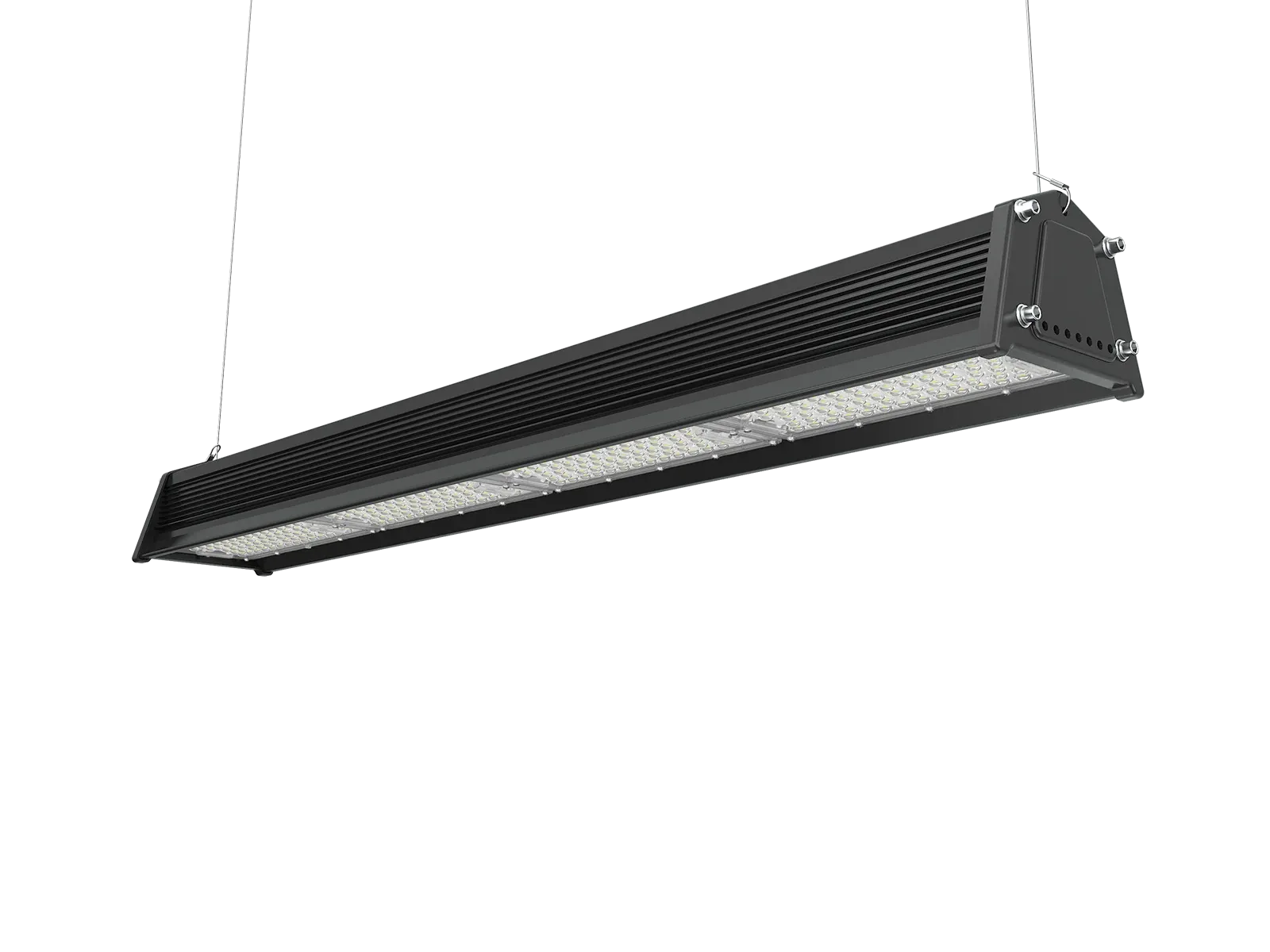
A KIRITO option to discuss: LHB10
KIRITO LHB10 is worth shortlisting for this application because its catalogue describes a long, narrow rectangular distribution and an asymmetric optical arrangement for warehouse aisles between high shelves. Multiple mounting and control options are also listed. These are relevant choices for an aisle brief, rather than a promise that one fitting arrangement suits every rack system. Confirm the exact optic and its orientation, then assess the selected configuration against aisle width, rack height and fitting spacing. Include the appropriate mounting hardware and available control arrangement in the product enquiry.
Common questions
Does every linear fitting produce an aisle beam?
No. Housing shape does not establish optical distribution. Check the selected lens and photometric file, then assess the actual aisle and picking surfaces.
What measurements help most?
Clear aisle width, rack height, luminaire height, rack-face positions and proposed fitting spacing are particularly useful, together with the tasks and project lighting criteria.
Our team brings more than 30 years of professional lighting industry experience, with locations in Kajang and Johor. Share your rack plan, aisle widths and mounting heights to discuss the KIRITO configuration and supply quantities. Delivery enquiries can cover both East Malaysia and West Malaysia, with timing and availability confirmed for the order.
Discuss LHB10 for your site