
High Ceilings, Dark Factory Floors: Choosing High Bay Lights in Malaysia
A factory can have powerful lights overhead and still leave the work below poorly illuminated. In a high-ceiling building, the result depends on how much light reaches the working area, how evenly it is distributed and what stands between the fitting and the task. The starting point is the mounting height and lighting layout, followed by a product with the appropriate output and optics.
In this guide
Measure the distance to the work
Ceiling height gives you part of the picture. The useful measurement is the distance from the proposed light position to the surface that needs illumination. A fitting above an assembly bench serves a different task from one above a vehicle route or warehouse picking area.
For example, a light mounted 12 metres above the floor sits about 11 metres above a workbench that is one metre high. Assessing the lighting at that working surface gives a more useful picture than considering the floor alone.
Include machinery, overhead cranes, roof beams and racks in the survey. A powerful fitting cannot illuminate a surface directly through a solid obstruction. Sometimes the layout needs different positions or supplementary task lighting.
Understand watts, lumens and useful light
Watts describe electrical input. Lumens describe light output. Lux describes the amount of light arriving on a surface. Those measurements answer different questions, so wattage alone is a poor basis for choosing factory high bay lights.
A large lumen output can still produce an unsuitable result if the distribution misses the task or creates bright pools with dark gaps between them. Equally, adding more fittings without reviewing their positions can increase electricity consumption while leaving the original visibility problem unresolved.
Compare the proposed number of fittings, total electrical load and calculated lighting result together. The required illumination should follow the work being carried out and the applicable project criteria.
Choose a beam that suits the height and layout
A broad beam spreads light across a wider area. A narrow beam concentrates it into a smaller area. At a substantial mounting height, a narrower optical option may be worth assessing where the task requires more concentrated distribution.
The narrowest beam is not automatically the best choice. Fittings spaced too far apart can leave dark gaps, while concentrated light in an operator’s sightline can create discomfort. Beam selection and spacing need to be considered together.
Ask for photometric data for the exact optical configuration being proposed. A lighting calculation can then assess illumination, uniformity and relevant viewing conditions against the actual building layout.
Check the result where people actually work
Walk the production floor and identify the areas where visibility causes difficulty. Operators may be reading labels, inspecting components or moving between machines. Those tasks can involve horizontal, vertical and angled surfaces.
Record existing fitting positions and photograph the obstructions around them. If racks or production lines have moved since the original installation, the lighting plan may need to change with them. Replacing every fitting in the same position can preserve the same shadows.
Include heat, dust and maintenance access
For factories and warehouses in Malaysia, conditions near the roof deserve attention. Heat from the process or roof space, accumulated dust and ventilation all affect the environment around the fitting. Check the selected model’s operating limits against conditions at its proposed position.
Plan how the light will be cleaned and serviced too. A fitting above an active production line may require access equipment and an interruption to operations. Those practical costs belong in the comparison alongside the purchase price.
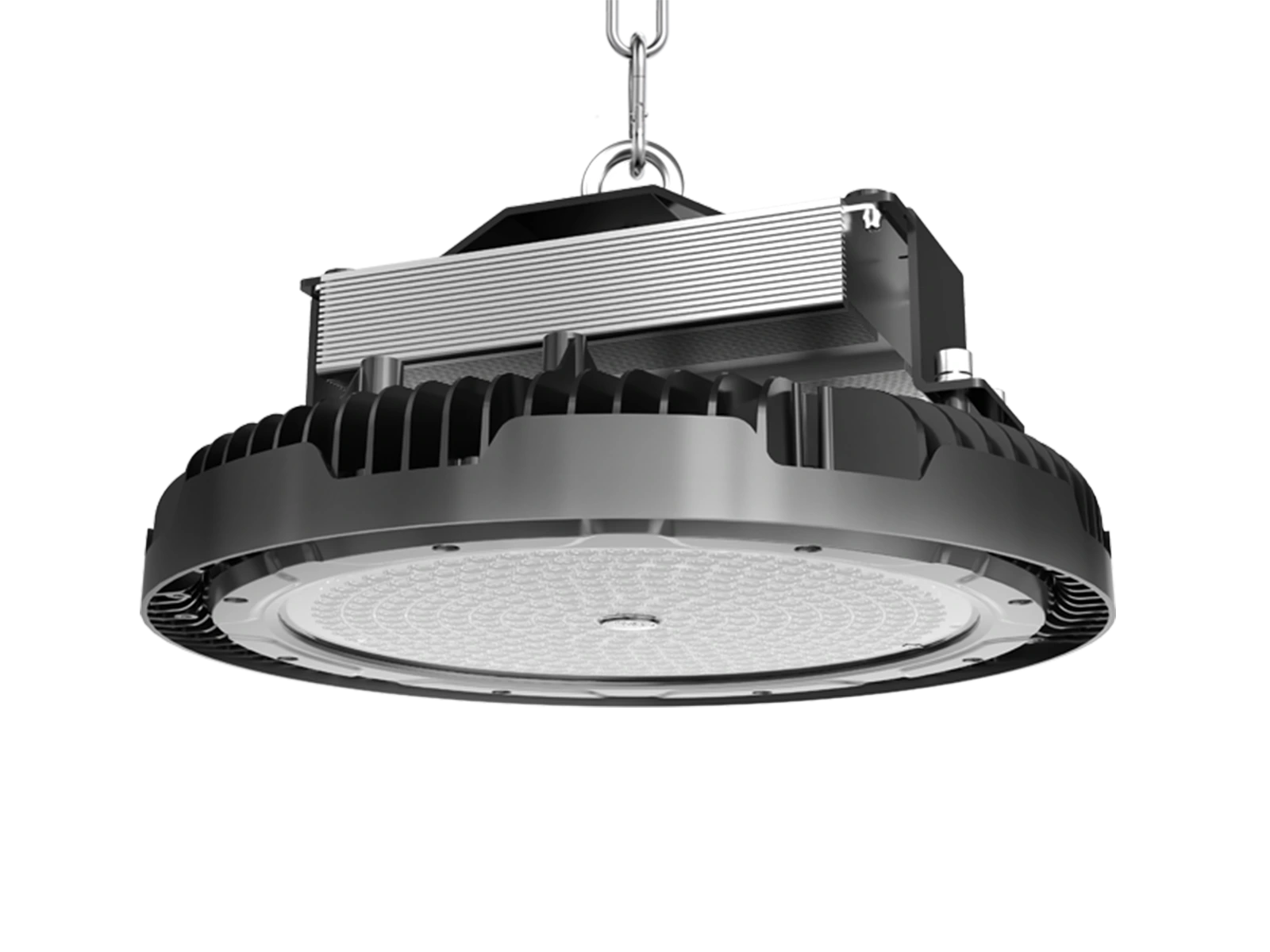
A product to shortlist: KIRITO HB37
KIRITO HB37 is a high bay option to investigate for demanding high-ceiling applications. Its catalogue lists a 450W configuration and several beam options, including a narrow 15° distribution. These features make it relevant when the project calls for a substantial light output and a more concentrated optical arrangement.
The selected optic, mounting position and spacing still need to follow the lighting calculation. Confirm the complete model, fixing arrangement, operating conditions and current product documentation before ordering.
Prepare a useful high bay lighting enquiry
Share the following details so the product discussion starts with the space and the work it needs to support:
- Building dimensions and proposed mounting height.
- Working surfaces, tasks and operating hours.
- Machinery, racks, cranes and other obstructions.
- Existing fitting models, positions and photographs.
- Temperature, dust exposure and maintenance restrictions.
- Project lighting criteria, quantity, timeframe and delivery postcode.
Our team brings more than 30 years of professional lighting industry experience, with locations in Kajang and Johor and delivery across East Malaysia and West Malaysia. Share your factory layout and mounting height with us to discuss the KIRITO options, selected configuration and supply requirements for your project.
Discuss your high bay lighting requirements